
Engineering guidance. Examples and proposed workflows are illustrative.
Start with a material record at the mixer
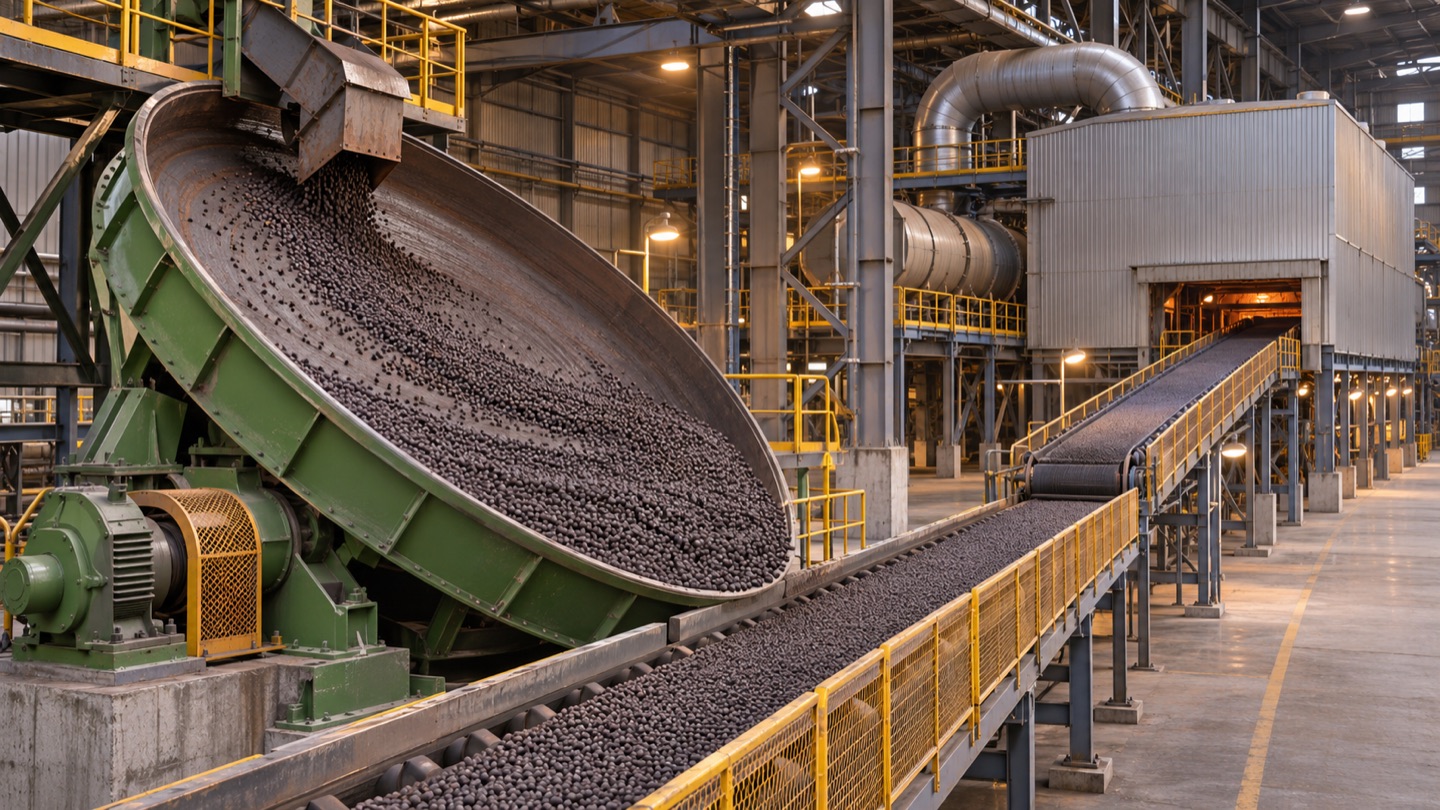
Metso describes pellet preparation as combining fine iron-bearing material with suitable binders and additives before balling and thermal treatment. For a digital record, identify the concentrate source, available chemistry, moisture, additive recipe, and the equipment time window in which the blend was produced. Preserve revisions when a laboratory result arrives later. The investigation then starts from a defined material cohort instead of an average feed description that conceals a change within the shift.
Treat balling and returns as a connected circuit
Green pellets are formed in discs or drums, and sizing can return unsuitable material to the circuit. Record fresh feed, relevant water additions, available size observations, and return streams with their measurement basis. Define whether a throughput display represents fresh material or circulating material. For an illustrative troubleshooting review, compare a change in returns with the preceding blend and balling conditions, while showing any unavailable measurements that limit the explanation.
Map the thermal route to the installed technology
A straight-grate plant carries material through thermal zones on traveling pallets; a grate-kiln arrangement separates grate preparation, rotary-kiln firing, and cooling equipment. Build the twin around the installed route and retain the identifiers needed to follow material through it. Associate zone observations with material passage using documented speed and residence assumptions. A temperature trend alone does not establish which product experienced that condition when the plant rate changes.
Include cooling and recovered heat in the boundary
Metso describes the annular cooler as part of the grate-kiln system, cooling hot pellets while recovering heat. Use the actual plant gas-flow diagram to decide which fan, pressure, temperature, and fuel measurements belong in an energy review. Keep total energy and energy per accepted product tonne as separately defined quantities, with the same reporting window and inventory treatment. Record meter coverage so a change in the calculation boundary cannot masquerade as an operating improvement.
Attach product tests to their sampling context
Agree the required product tests with process and quality teams, including the relevant physical and metallurgical characteristics for the receiving operation. Store the sample location, collection interval, preparation method, result unit, and method version with the result. Connect that sample to the best-supported production window and retain any ambiguity. This makes it possible to investigate whether a quality change coincided with a blend revision, a thermal transition, or an issue in sample handling.
Pilot one question across a complete production window
Choose a documented quality excursion or operating change and replay the complete route from mixing to finished-product sampling. Compare windows with similar product specification and operating state, then review alternative explanations with plant staff. A useful pilot delivers a material timeline, a transparent energy calculation, a list of missing observations, and an agreed follow-up measurement. Numerical examples in a public demonstration should be labeled illustrative and should never imply a verified plant improvement.
Technical references
Continue exploring
Steel and DRI
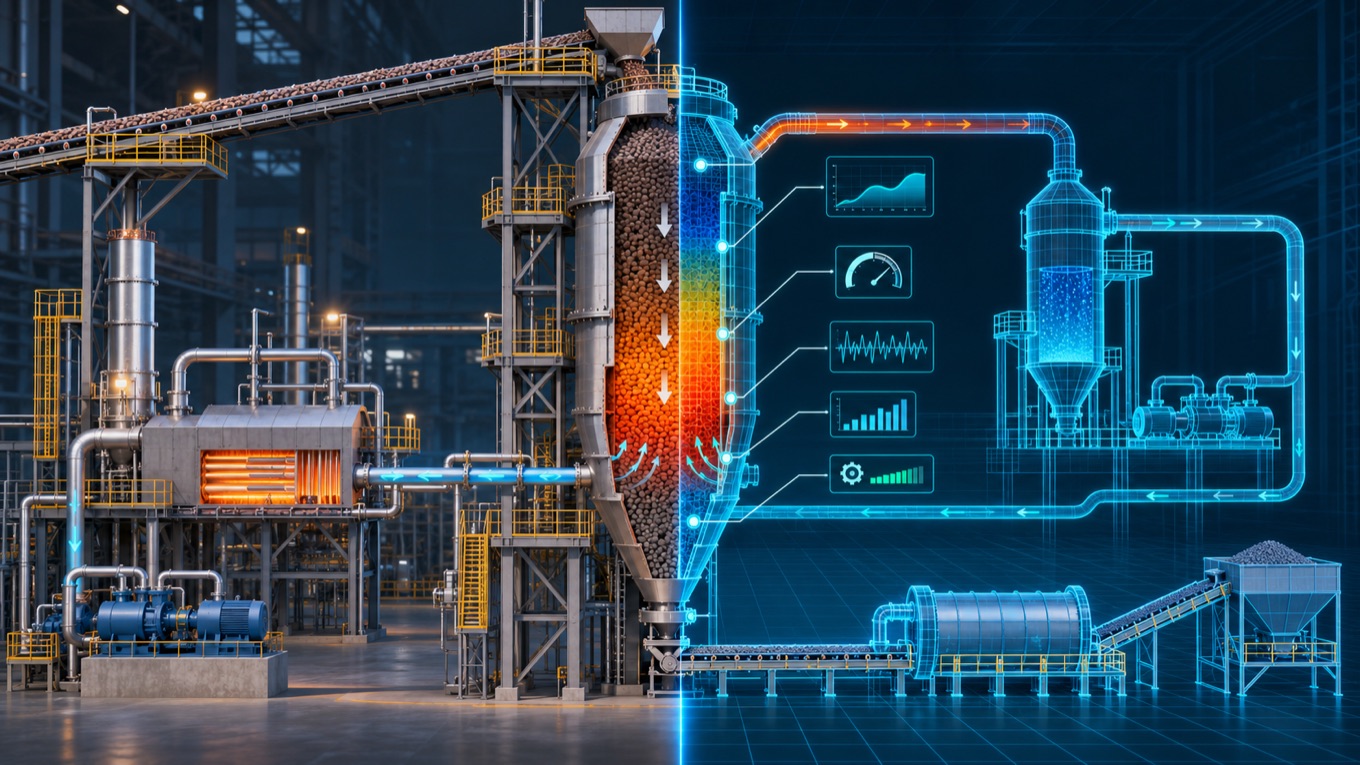
What goes into a DRI shaft-furnace twin?
Start with the process boundary, then make time, data provenance, and validation visible.
Read articleSteel and DRI
Reading the DRI furnace through gas, solids, and time
A practical data model for investigating a shaft furnace, its reducing-gas loop, and the product observations that arrive later.
Read article
Steel and DRI
From charge basket to certified product: a traceable steel heat
Connect charge materials, heat events, laboratory results, and product identity so steelmaking reviews can follow the evidence across production stages.
Read article