

The engineering path
A representative architecture. Interfaces and deployment are scoped with each site.
Physical process
Equipment · material routes
Connected evidence
Signals · lab · events
Engineering model
Balances · assumptions · versions
Reviewed decision
Replay · scenarios · findings
Start with an engineering decision
A useful twin starts with a question that operations and engineering can answer together. For a DRI furnace, that could mean investigating how a feed change relates to later product observations. For a processing plant, it could mean explaining a material-balance gap across a selected operating period. We define the process boundary, intended users, available evidence, and decision to be supported before choosing the model or the visual interface.
Connect assets, material, and time
We build a shared representation of equipment, process areas, material routes, and measurement points. Historian signals, laboratory samples, maintenance events, and production records retain their source identifiers and observation times. A sample taken during one shift and reported in the next remains linked to the relevant process period. This foundation lets an engineer move from a process diagram to a trend, a sample, and the equipment history behind the same event.
Choose a model the team can examine
The modeling approach follows the question and the available observations. A scope may combine material or energy balances, equipment relationships, and statistical estimates where direct measurements are incomplete. We document units, assumptions, parameter sources, and the operating range used to develop each component. Measured values, calculated quantities, and model estimates remain distinguishable, giving process engineers a practical way to challenge the explanation and identify where another measurement would be valuable.
Replay operating periods and compare scenarios
A scenario workspace can compare a recorded operating period with a proposed change under stated assumptions. For example, reviewers could examine a different feed profile while keeping the reference period, model version, and initial conditions visible. The view would align input changes, estimated responses, and later observations on a common timeline. Saved scenarios retain their assumptions and reviewer notes so a discussion can be revisited when new laboratory or operating evidence becomes available.
Agree pilot acceptance before development
We select a bounded pilot with the process team and agree how usefulness will be assessed. Evaluation includes periods reserved from model development, comparison with a simple baseline, and separate review of steady operation and transitions. The report shows error, data coverage, and conditions where estimates need further review. Acceptance combines the agreed technical criteria with a practical exercise in which engineers reproduce a known event and explain the result using the twin.
Fit the twin into daily engineering work
Deployment is planned around the site's approved infrastructure, data interfaces, and review responsibilities. A first operational scope can publish read-only process views, reviewed scenarios, and engineering notes through a bilingual web interface. Handover includes model versions, configuration, data-quality checks, and a procedure for investigating unexpected estimates. As equipment, feed, or operating practice changes, the team can review the affected assumptions and repeat the relevant acceptance checks before releasing an updated model.
How we deliver
- Define the decision
- Map process and data
- Build and replay
- Validate with engineers
- Deploy and review
What your team receives
- Process boundary, asset model, and signal dictionary
- Documented model and versioned scenario library
- Pilot evaluation with baseline and failure cases
- Bilingual engineering views and handover guide
Practical questions
Can we begin with existing plant data?
Yes. Discovery reviews historian exports, laboratory records, equipment information, and operating notes. We then identify a question the available data can support and list any measurements needed for a later phase.
How does the model remain credible as operation changes?
Each release records its development data, assumptions, and evaluation results. Changes in equipment or operating range trigger a targeted review, with new observations used to check the affected model components.
What makes a sensible first pilot?
One process area, a clear engineering question, named reviewers, and enough historical evidence to test the answer. The scope should let the team complete a full cycle from observation to a reviewed finding.
See the next decision take shape.
Replay the evidence, look ahead, and compare the effect of an intervention on equipment condition or product quality.
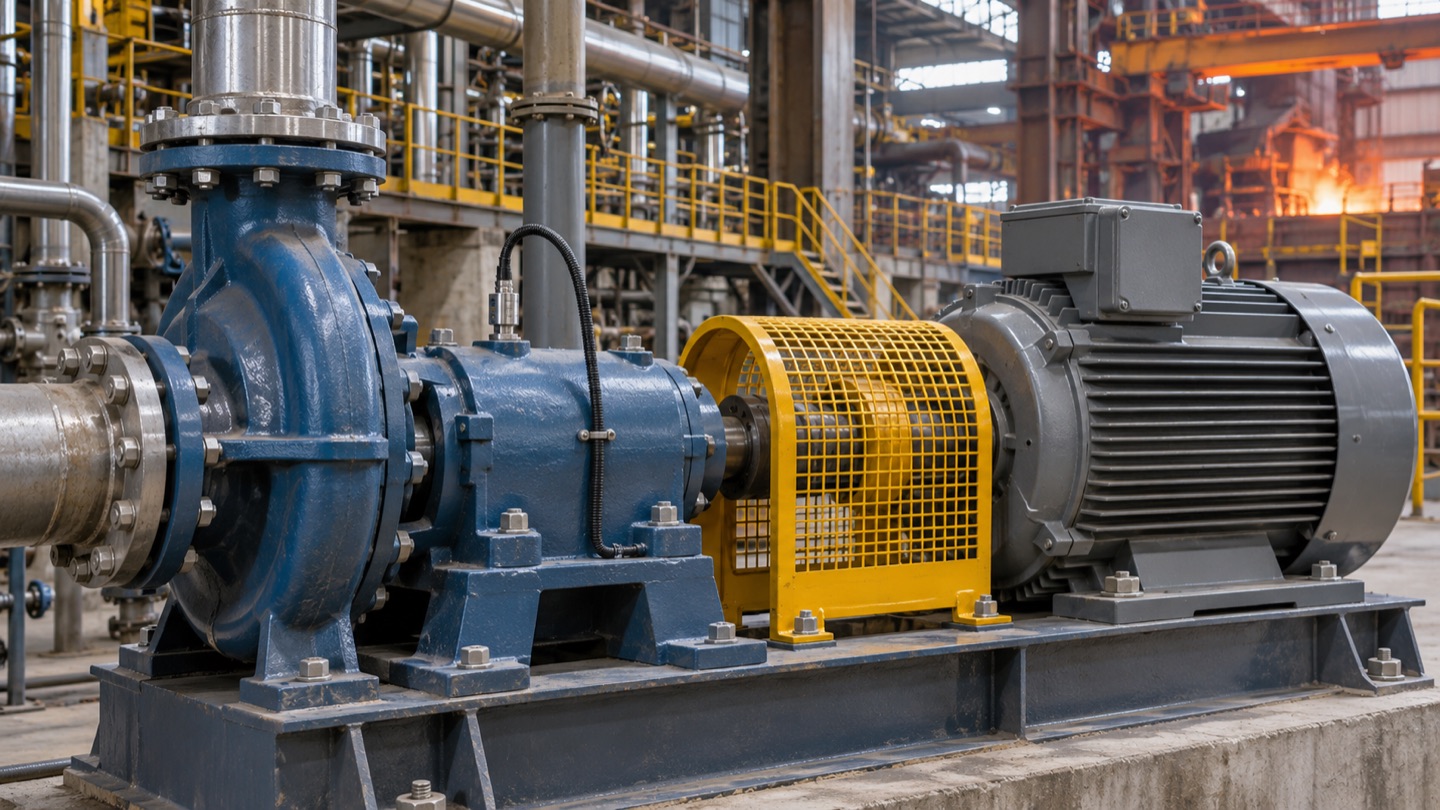
Critical process pump · Drive-end bearing
A rotating asset shared by steel, mineral-processing, and energy operations.
- Observe the change
- Forecast the trend
- Compare an action
Compare an action
Inspect bearing condition, lubrication, and alignment; connect the finding to a maintenance task.
See the maintenance window before the limit.
A rising vibration trend becomes an inspection window. Replay its development, then compare continued operation with a planned bearing service.
The forecast uses only the evidence available at the selected point.
Inspect the data and forecast
Observed history
| Recorded hour | Bearing vibration · RMS (mm/s) |
|---|---|
| 0 | 1.45 |
| 8 | 1.48 |
| 16 | 1.5 |
| 24 | 1.56 |
| 32 | 1.67 |
| 40 | 1.8 |
| 48 | 2.02 |
| 56 | 2.28 |
| 64 | 2.59 |
| 72 | 2.91 |
Forecast from the selected observation
| Hours ahead | Forecast | With intervention |
|---|---|---|
| 0 | 2.88 | 2.88 |
| 12 | 3.3 | 3.3 |
| 24 | 3.72 | 1.79 |
| 36 | 4.13 | 1.58 |
| 48 | 4.55 | 1.55 |
How this forecast works
The forecast fits a straight-line trend to the last five available observations. Its envelope widens with recent variability and the distance into the future. The comparison applies a stated recovery response after an intervention; it is a scenario, not a diagnosed failure time.
- Review limit
- 4.5 mm/s
- Intervention after
- 12 h
- Recovery target
- 1.55 mm/s
Dracoverse · DRI shaft furnace
A furnace view connecting material flow, the gas circuit, and product evidence.
- Observe the change
- Forecast the trend
- Compare an action
Compare an action
Review the feed, reducing-gas conditions, and laboratory timing with the process team.
Follow quality drift into the next operating hours.
Connect product observations to the decision ahead. Compare continuation of the recent trend with an assumed feed-and-gas stabilization response.
The forecast uses only the evidence available at the selected point.
Inspect the data and forecast
Observed history
| Recorded hour | Product metallization (%) |
|---|---|
| 0 | 94.3 |
| 1 | 94.24 |
| 2 | 94.31 |
| 3 | 94.17 |
| 4 | 94.2 |
| 5 | 94.04 |
| 6 | 93.81 |
| 7 | 93.53 |
| 8 | 93.22 |
| 9 | 92.94 |
Forecast from the selected observation
| Hours ahead | Forecast | With intervention |
|---|---|---|
| 0 | 92.95 | 92.95 |
| 1.5 | 92.53 | 93.08 |
| 3 | 92.11 | 93.76 |
| 4.5 | 91.69 | 94.03 |
| 6 | 91.28 | 94.13 |
How this forecast works
The forecast fits a straight-line trend to the last five available observations. Its envelope widens with recent variability and the distance into the future. The comparison applies a stated recovery response after an intervention; it is a scenario, not a diagnosed failure time.
- Review limit
- 92 %
- Intervention after
- 1 h
- Recovery target
- 94.2 %
Interactive demonstration using an illustrative dataset. Review limits and intervention responses are scenario settings.
Technical references
Blue Waymark · Industrial engineering
Scope the first useful step
Choose one process boundary, identify its data owners, and agree how the pilot will be evaluated.